Separate brush from invasive plants
Fallen limbs, volunteer saplings and established buckthorn are not the same maintenance problem. Buckthorn can resprout and germinate from a persistent seed bank. An effective scope identifies which vegetation should be removed, which desirable trees should remain and where access is needed.
Start by walking property lines, paths and natural areas. A heavily shaded thicket may need a staged approach, while a trail edge may be cleared in a single visit and monitored afterward. Avoid treating every understory plant as unwanted brush.
Match the method to the ground
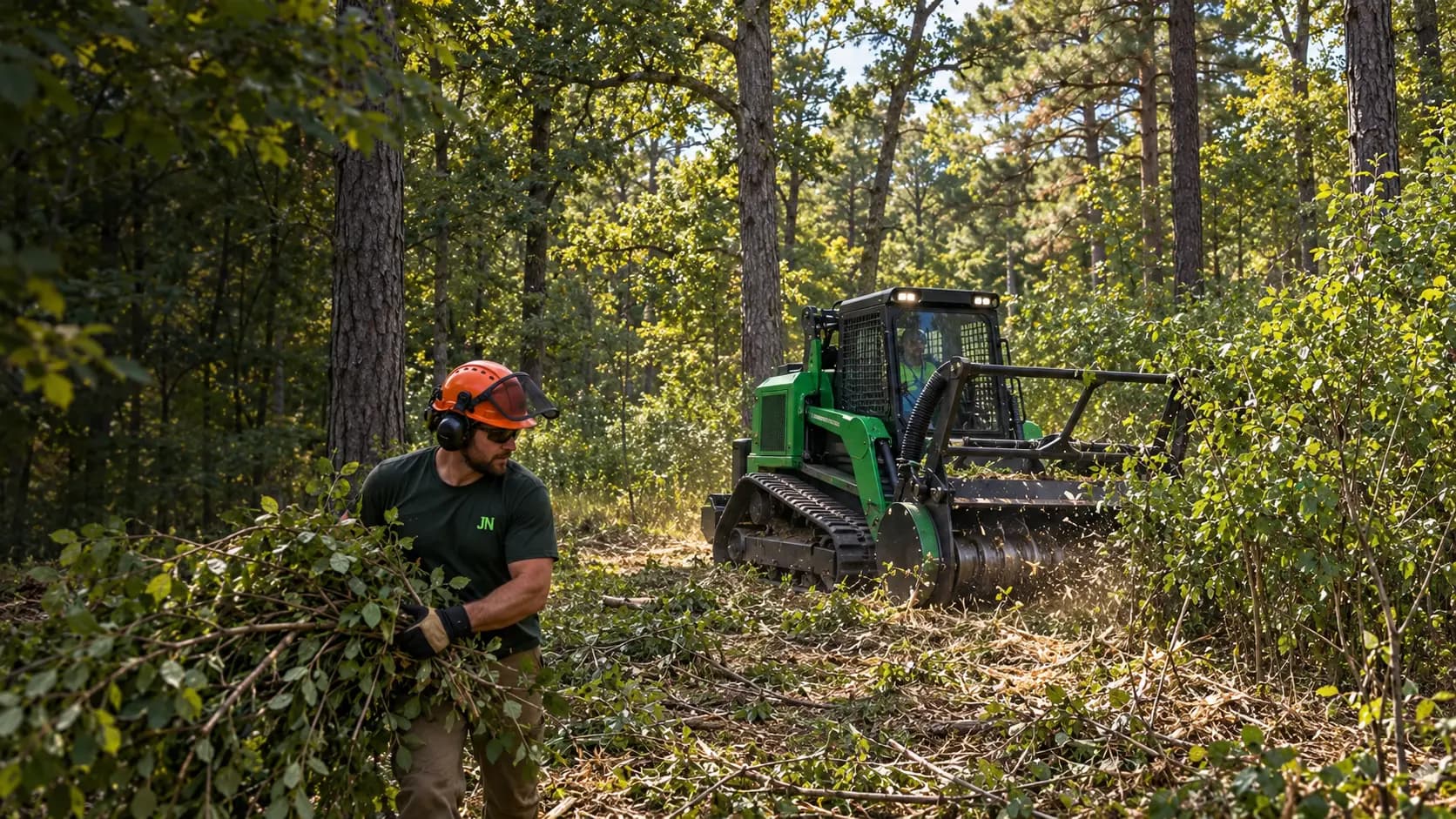
Mechanical mulching, selective cutting, chipping and hauling have different effects on soil, visibility and the finished site. Slopes, wetlands, soft lake-lot soils, stones and buried obstacles can constrain equipment. Ask what will be left on the ground and whether follow-up is expected.
In Pequot Lakes and Ideal Township, acreage and trail access often shape the plan. Crosslake and Nisswa cabin lots may have narrower drives and more trees to protect, while Brainerd properties may prioritize fences, neighbors and usable yard space.
Build follow-up into expectations
Removing mature buckthorn opens light and space, but seedlings and regrowth can return. Monitoring and appropriate follow-up treatment are part of long-term control; one clearing date is not a permanent guarantee.
JN can connect brush work with tree removal, lot preparation and stump grinding where that reduces repeat equipment travel. The estimate should describe the clearing boundary, material handling and what happens after the first pass.
Every property is different. A site visit can clarify the safest scope, access, equipment and cleanup for your project.