The lake lot changes the plan
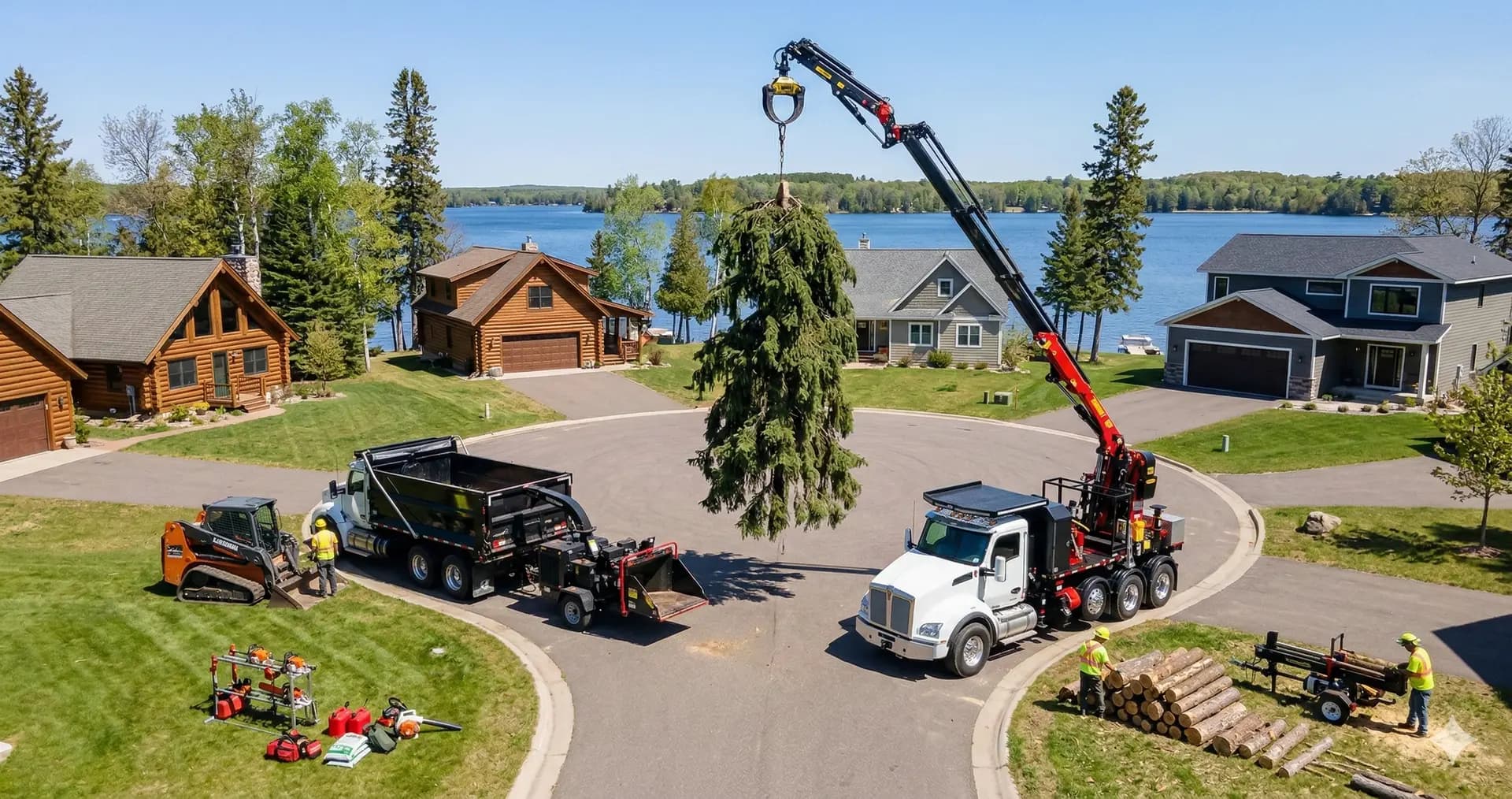
A tree that would be routine in an open field can be a different project beside a cabin, boathouse, deck or shoreline. Crosslake and the Whitefish Chain have narrow driveways, neighboring properties, mature trees worth preserving and places where heavy equipment must be positioned with care. The first step is to walk the site and identify what must be protected.
We evaluate lean, canopy weight, defects, access, utilities, landing zones and how each section of the tree can be moved out. Crane-assisted lifting may be useful when open felling is not possible; careful rigging can be the better fit elsewhere. Equipment is a tool, not a substitute for judgment.
What to discuss at the estimate
Ask what happens to brush, logs and the stump; whether ground protection is needed; where equipment will enter; and what cleanup is included. If the tree is storm-damaged or hanging over a structure, do not attempt to pull or cut loaded material yourself. A professional assessment helps separate immediate hazards from work that can be scheduled deliberately.
JN Tree Service serves Crosslake, Ideal Township, Manhattan Beach, Fifty Lakes, Breezy Point and nearby properties around the Whitefish Chain. Our goal is a controlled job and a property you can still enjoy when the crew leaves.
From assessment to a clear scope
A useful estimate should spell out the work area, the trees or material involved, equipment access, protection of nearby features and how debris will be handled. If you have photos, include a wide view of the property as well as the specific concern; photographs help start a conversation but do not replace an on-site assessment.
Ask which tasks are included and which are optional, especially stump work, chipping, hauling and final landscape repair. That clarity helps compare proposals and prevents a surprise after the crew leaves.
Plan for the seasons and the next step
Conditions change across the Brainerd Lakes Area. Ice, saturated soil, summer storms and lake-property access can all affect scheduling and the equipment route. Urgent hazards deserve prompt attention; routine work can be timed around tree health and site conditions.
The best result protects what you want to keep and prepares the property for what comes next. If multiple services are needed, discussing them in one site visit can reveal a safer and more efficient sequence.
Every property is different. A site visit can clarify the safest scope, access, equipment and cleanup for your project.