
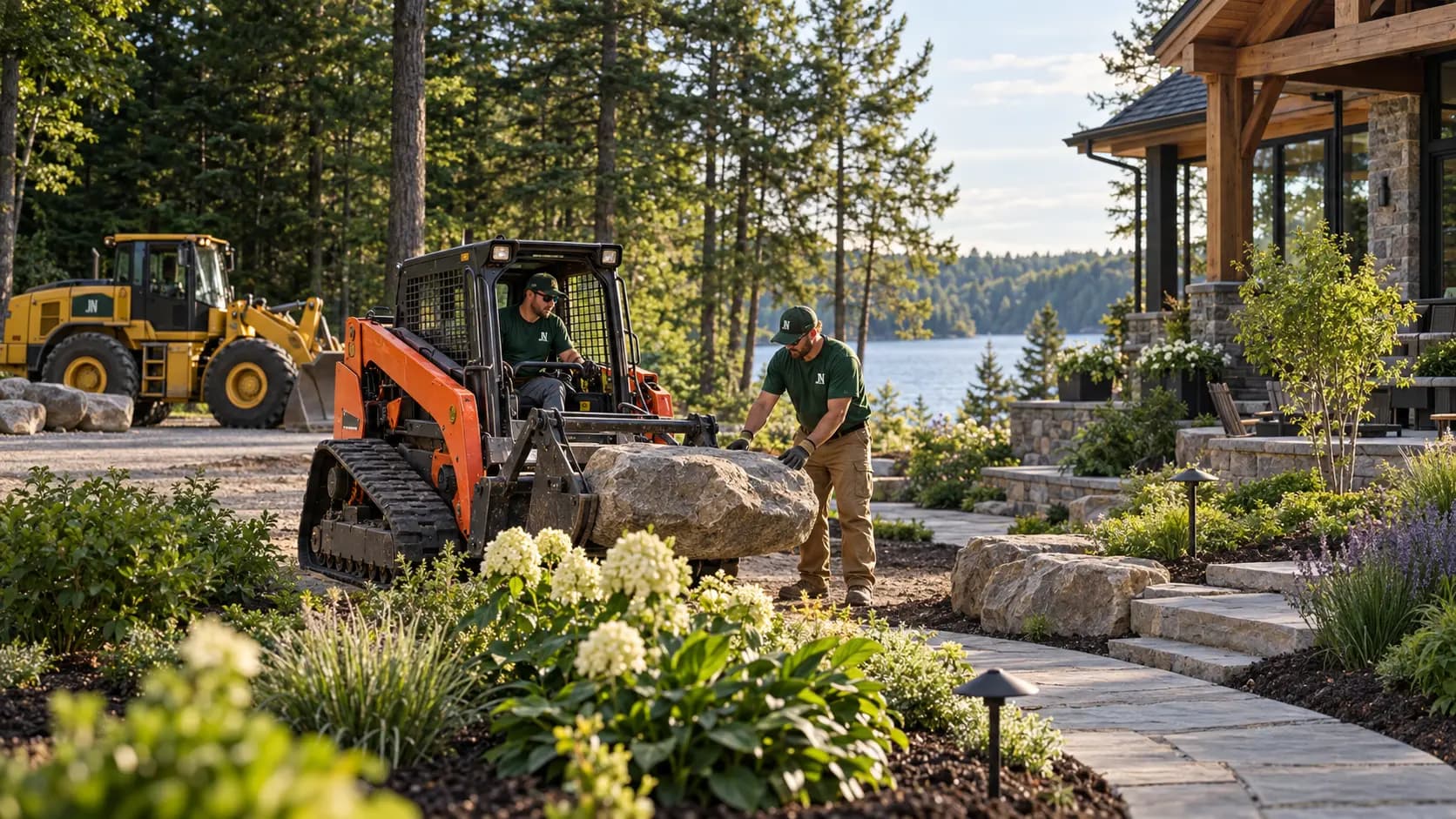
Design around what stays
The best lake-property landscapes begin with the mature trees and terrain that remain. Mark trees to protect, evaluate drainage and establish the routes from house to drive, yard and lake. A beautiful plan on paper fails if construction compacts the root zones that make the property special.
Stone, planting, grade and paths should fit how the space will be used year-round. Snow storage, shaded areas and spring runoff matter as much as summer appearance in Central Minnesota.
Sequence heavy work before finish work
Tree removal, selective lot clearing, stump grinding and brush handling usually come before final grading and planting. When crews can plan equipment access together, there is less risk of reopening a finished path or driving across a newly planted bed.
On a Brainerd home lot this may mean moving a hazardous tree before a patio is installed. In Crosslake, Nisswa and Pequot Lakes, a narrow wooded drive and a lake-facing slope can make the sequence more consequential.
Leave room for the Northwoods
Native and site-suited plants can make maintained areas feel connected to the surrounding woodland. Rather than flattening everything into lawn, use stone, groundcover and retained understory where they fit the site and local rules.
Ask for an estimate that distinguishes clearing, material handling, grading, planting and the expected finish. JN can discuss the connected tree and landscape scope during a property visit, with shoreland approvals checked where applicable.
Every property is different. A site visit can clarify the safest scope, access, equipment and cleanup for your project.