Diagnose the problem before choosing materials
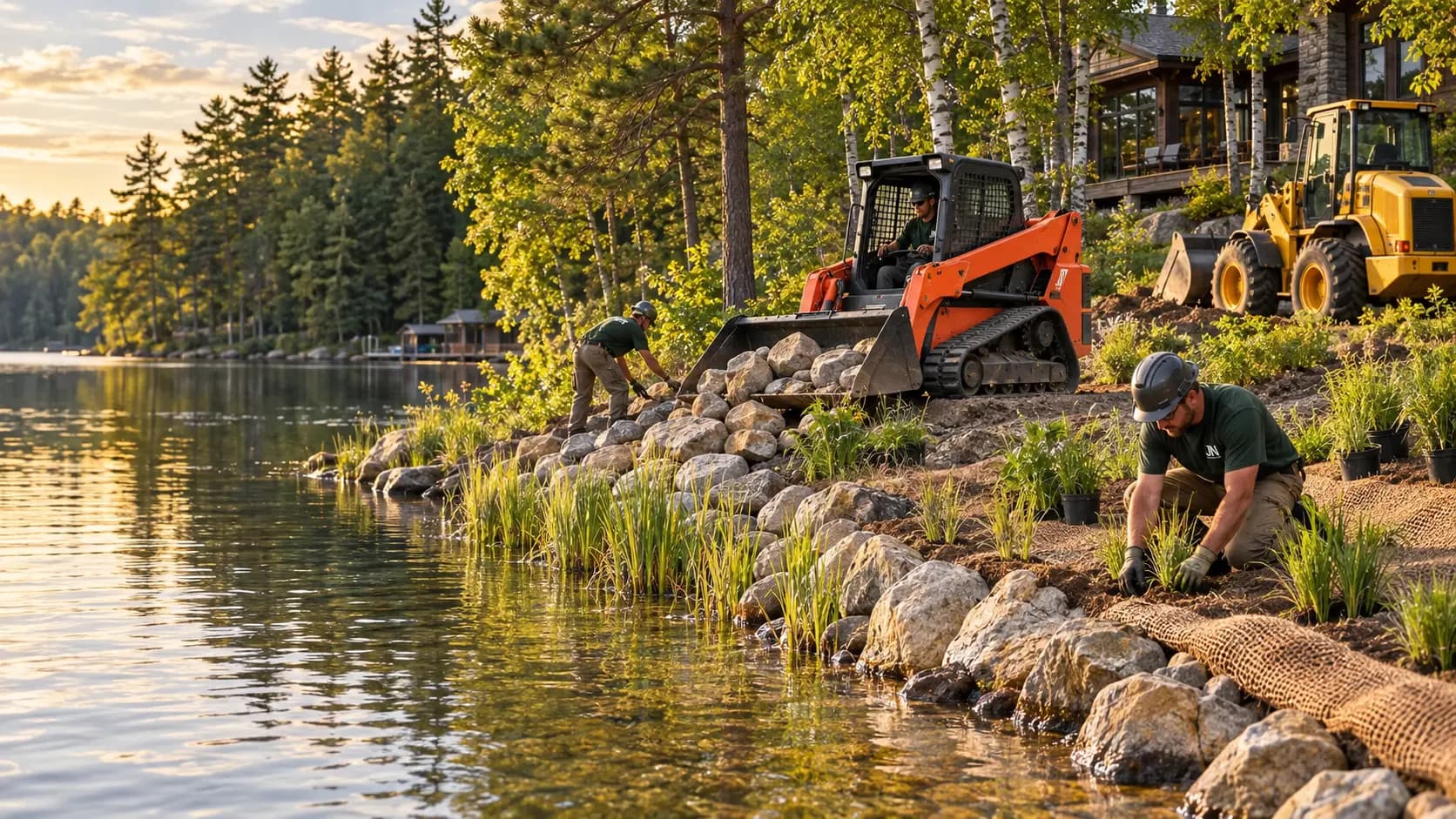
An eroding shore may reflect waves, runoff from uphill, foot traffic, loss of vegetation or several factors at once. Rock alone does not address every cause. Observe where water enters, where soil leaves and which parts of the bank remain stable.
A shoreline can still offer a view and access without removing every plant. Native vegetation helps hold soil and softens the transition from yard to water. The right balance depends on slope, exposure and how the family uses the property.
Check the rules for this parcel
Work below the ordinary high-water level or within shoreland areas can require permits or review. Property boundaries, lake classification and the exact scope matter. Confirm applicable requirements with the county, city or township and Minnesota DNR before work begins.
A plan for a Crosslake Whitefish Chain lot may not transfer unchanged to Gull Lake near Nisswa or a smaller lake by Pequot Lakes. Avoid assuming a neighboring project establishes what is allowed on your parcel.
Plan the route and the finish
Equipment access, septic systems, desirable trees and neighboring shorelines all influence the sequence of work. Discuss temporary erosion controls, stone handling, native planting and cleanup in the same conversation.
JN Tree Service & Landscaping can review the property and help scope the landscape and vegetation work, subject to site conditions and needed approvals. A clear plan keeps the lakeside character in focus rather than treating the bank as an isolated construction detail.
Every property is different. A site visit can clarify the safest scope, access, equipment and cleanup for your project.