
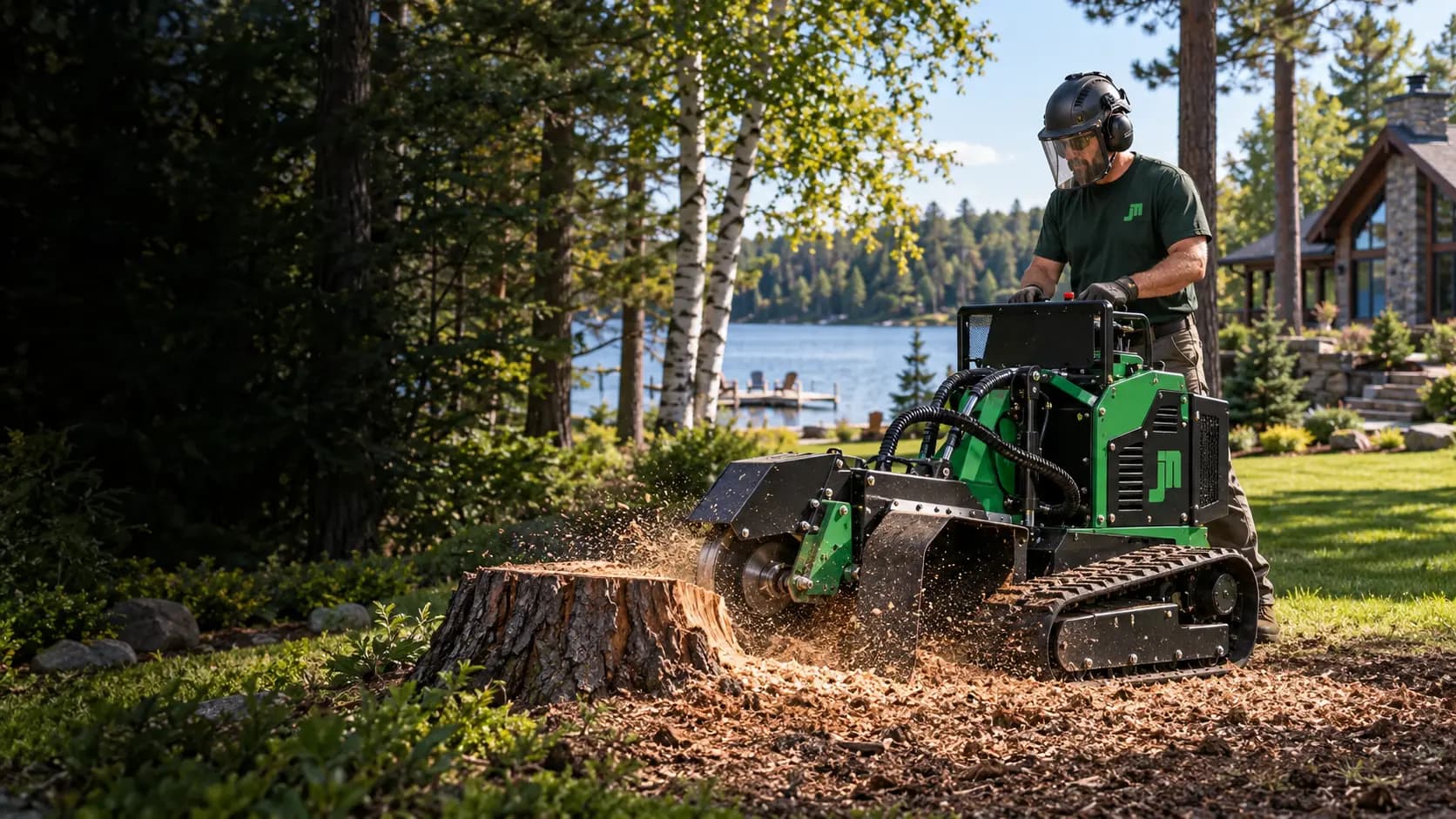
Start with the next use of the space
A stump in a lawn is not the same problem as a stump in a future driveway, building pad or planting bed. Tell the estimator whether the area will be mowed, replanted, graded or built on. Grinding depth and follow-up ground preparation should match that intended use.
A stump grinder reduces wood below the surface but does not remove every deep root. Chips and soil remain around the work area. Ask whether chips stay, are raked, or are hauled, and whether topsoil or seed is included in the estimate. Those details make a difference to the finished yard.
Access and hidden constraints
Gate width, slopes, soft ground, septic areas and nearby structures determine which machine can reach the stump. Before work, identify irrigation, buried utilities and landscape lighting; contact the appropriate utility-location service for public lines.
On a Crosslake or Nisswa lake lot, a narrow drive or lakeside slope may change the route and the equipment. In Brainerd and Pequot Lakes, older yards and wooded acreage present their own obstacles. A site visit avoids promises based on a photograph alone.
Coordinate removal and landscape work
If the tree is still standing, discussing stump work during the removal estimate can simplify equipment planning and access. Separate timing may be better if grading or landscaping follows later.
JN can discuss stump grinding as a standalone service or alongside tree removal, brush clearing and site preparation. Ask for the precise stump count, approximate grinding depth, chip handling and protection of nearby plants in writing.
Every property is different. A site visit can clarify the safest scope, access, equipment and cleanup for your project.